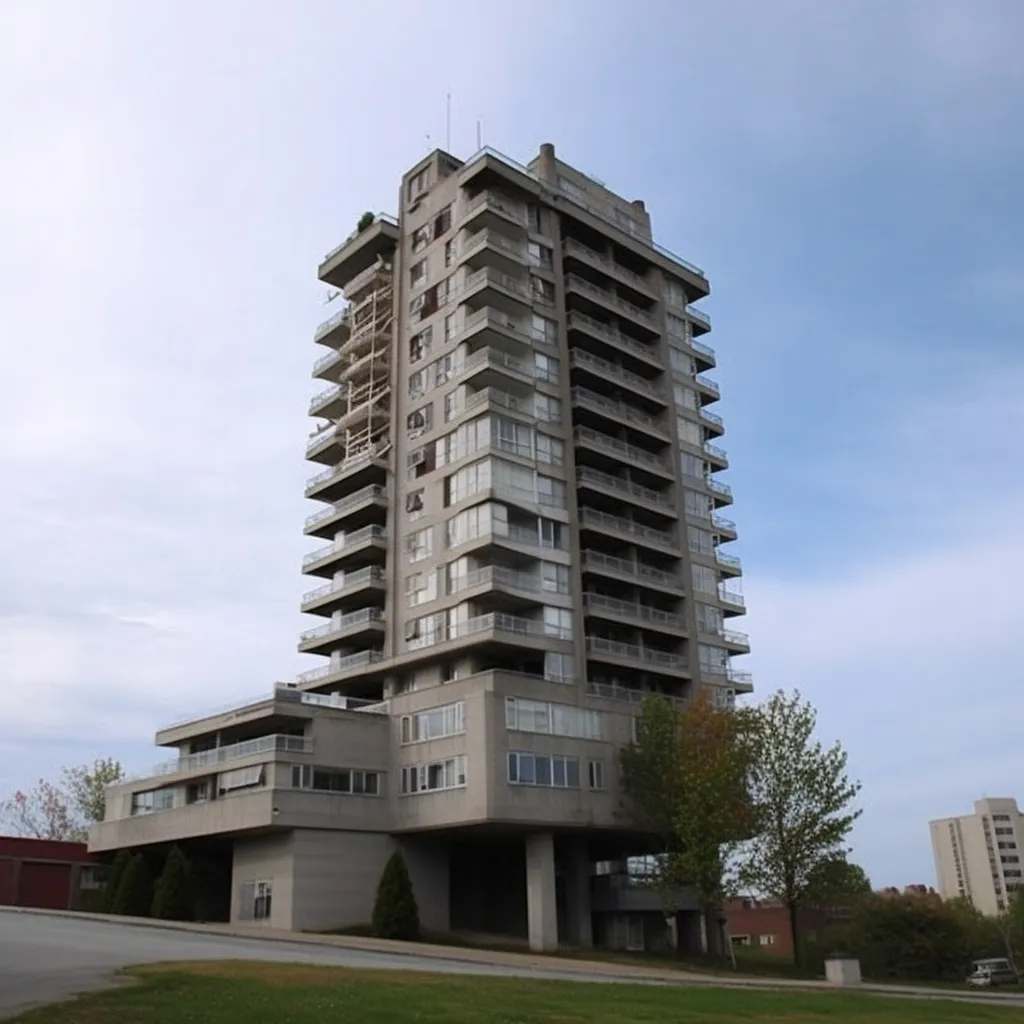
Financing Hotels and Apartment Buildings: A Guide
Why hotels and apartment buildings are financed differently, the main loan options for each in Canada and the U.S., and how to compare offers.

Updated & fact-checked Figures are linked to their sources at the end of the article.
Hotels and apartment buildings are both income properties, and they are often bought by the same investors, but lenders treat them very differently. An apartment building earns rent from tenants on leases. A hotel earns revenue by selling rooms night by night and runs a business to do it. That one difference shapes how much you can borrow, from whom, and on what terms.
This guide is for first-time and experienced buyers of either type. It explains how the two are underwritten, the main financing options for each in Canada and the U.S., and what to check before choosing a lender. Each topic links to a more detailed guide.
Why lenders see them differently
How lenders view the two property types
Apartment building
- Income comes from leases, usually a year or longer
- Vacancy changes slowly, and demand for rental housing is steady
- Operating costs are relatively predictable
- Government-backed mortgage insurance is available in Canada (CMHC)
- Higher leverage and longer amortization are common
Hotel
- Income is resold every night; no leases
- Revenue can fall quickly when travel or the local economy slows
- Staffing, franchise and management costs are large and partly fixed
- No CMHC insurance; lenders take the full risk
- Lower leverage, more reporting and tighter covenants are common
Because hotel cash flow is more volatile, lenders size hotel loans more conservatively and look closely at the brand, the manager and the hotel’s operating history. Because apartment income is steadier, and in Canada can be insured, apartment loans can reach higher loan-to-value ratios and longer amortizations.
Financing an apartment building
In Canada, the defining feature of apartment financing is mortgage loan insurance from Canada Mortgage and Housing Corporation (CMHC). A lender with CMHC-insured financing is protected against default, which is why insured loans can be larger and cheaper than conventional ones.
CMHC’s standard multi-unit insurance applies to buildings with at least five rental units that are at least 70% residential. It allows a loan-to-value ratio of up to 85% and amortization of up to 40 years for existing properties and 50 years for new construction. Borrowers need a net worth of at least 25% of the loan and multi-unit management experience, or a property manager who has it.[1] CMHC’s MLI Select product goes further for buildings that commit to affordability, energy-efficiency or accessibility targets: up to 95% loan-to-value and up to 50-year amortization at the highest points level, with a minimum debt coverage ratio of 1.10 for standard rental housing.[2]
CMHC-insured apartment financing at a glance
Conventional (uninsured) mortgages from banks, credit unions, insurance companies and private lenders are the alternative: faster and more flexible, but at lower leverage. In the U.S., apartment buildings are typically financed by banks, life insurance companies, CMBS lenders and the government-sponsored agencies. U.S. SBA loans are not available for buying an apartment building to rent out: SBA rules make passive businesses owned by landlords ineligible.[3]
For new apartment projects, see our guide to funding an apartment building development.
Financing a hotel
There is no CMHC equivalent for hotels. Hotel debt in Canada comes mainly from banks, credit unions, BDC and private lenders, and for small properties through the Canada Small Business Financing Program, which supports loans of up to $1.15 million per borrower for businesses with revenue of $10 million or less.[4] BDC’s commercial real estate loan offers amortization of up to 25 years but excludes projects zoned for residential use, so it is a hotel option and not an apartment one.[5]
In the U.S., a hotel is an operating business, so it can qualify for SBA 7(a) loans of up to $5 million, as well as CMBS and bank financing.[6] Lenders in both countries focus on occupancy, average daily rate, RevPAR, net operating income after a furniture and equipment reserve, and debt service coverage. Our guide to how hotel loans work covers each of these, and securing funding for a hotel development covers new builds.
Debt, equity and partners
Most purchases combine a first mortgage with the buyer’s equity. When the equity is not enough, the gap can be filled with a mezzanine loan, preferred equity or a partner. Each layer costs more and takes more control the further it sits from the first mortgage. Our guide to debt and equity financing explains the capital stack, and the joint ventures guide covers bringing in a partner. For a comparison of banks and other lenders, see traditional lenders versus alternative funding sources.
How to compare financing offers
Checklist for evaluating a loan or partner offer
Loan amount and leverage
How much will the lender actually advance, after it applies its own valuation and its minimum debt coverage ratio? The lower of the two tests sets the loan.
All-in cost
Rate, lender and broker fees, insurance premiums (CMHC premiums on insured loans), legal and third-party report costs.
Term and amortization
A long amortization lowers payments; a short term means you will refinance sooner, at whatever rates apply then.
Recourse and guarantees
Who is personally liable if the property cannot pay? Hotel and construction loans often require personal guarantees.
Covenants and reporting
Minimum coverage ratios, reserve requirements, reporting deadlines and what happens if you breach them.
Prepayment and exit
What it costs to repay early or sell, and whether the loan can be assumed by a buyer.
For a partner: control and the split
How profits are shared, who makes decisions, and how either side can exit. See our guide to structuring a joint venture.
Sources
- Mortgage Loan Insurance for Standard Rental Housing — Canada Mortgage and Housing Corporation. Checked 2026-10-12.
- MLI Select — Canada Mortgage and Housing Corporation, Published September 21, 2026. Checked 2026-10-12.
- 13 CFR 120.110: What businesses are ineligible for SBA business loans? — Electronic Code of Federal Regulations (U.S.). Checked 2026-10-12.
- Helping small businesses get loans (Canada Small Business Financing Program) — Innovation, Science and Economic Development Canada, Modified 2026-06-22. Checked 2026-10-12.
- Commercial Real Estate financing and construction financing — BDC (Business Development Bank of Canada). Checked 2026-10-12.
- 7(a) loans — U.S. Small Business Administration. Checked 2026-10-12.